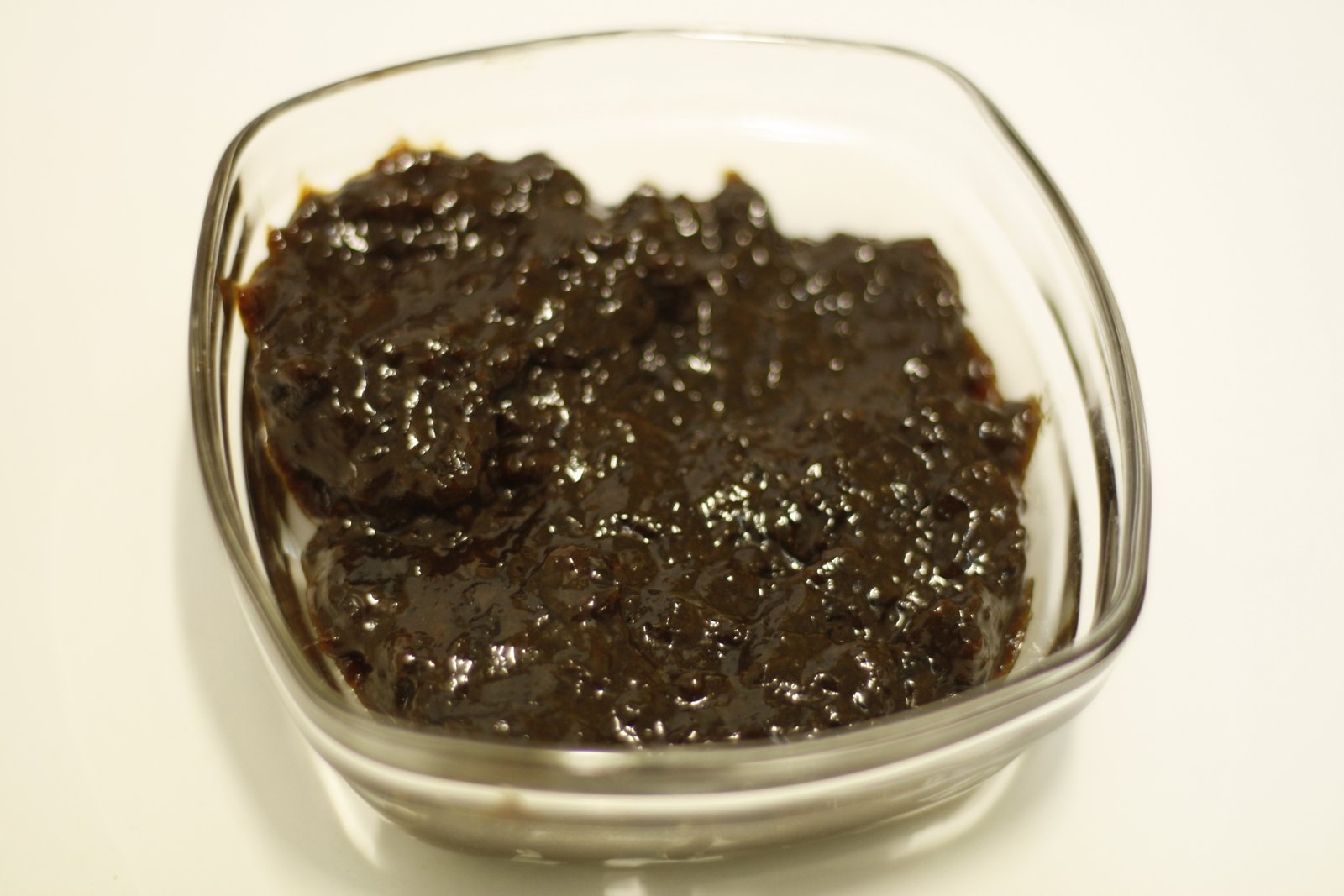
When I was a kid lekvar was something one bought in a store. A single company Simon Fisher, manufactured the stuff . I believe that they are still at it, but sadly they don’t sell their product in my neighborhood.
In English lekvar is known as prune butter. Set aside any crude quips, and know that lekvar is heavenly, Unlike a lot of other jams it manages to be sticky and sweet in a subtle earthy way. And it’s a perfect foil to hamentaschen dough, the old fashioned yeasty kind or even the glorified sugar cookies that are the modern day standard. When I was growing up, lekvar was the number one choice for hamentaschen fillings, . It was closely followed by mohn or poppy seed which appeals to homologically inclined mystics especially since, Mohn the Yiddish name for poppy seeds sounds like Homohn, which is the correct Hebrew pronunciation of the Purim villains name. I don’t know the origins of the rapperish Hay-man came from. Homohnn is also double entredre. It can also mean “the manna” which is called Mon in Hebrew.
Cookbook author Marcie Goldman divides the world up into two kinds of people, , the poppy seed folks and the lekvar people Unlike Mohn, lekvar doesn’t have a mystical overlay. Frankly, I can’t see any other reason for it’s use other than availability . Plums grow abundantly in Eastern Europe –and like many other East European staples we’ve adopted it into our tradition
For years, I resisted making lekvar because I thought it was complicated but I recently discovered that if you use pitted prunes and an immersion blender you can make up a batch in almost no time.
Lekvar
In a small sauce pan cook together one cup of pitted prunes with one cup of water and 1/3 cup of sugar, Keep the flame low so the water doesn’t boil out and stir from time to time.
When the prunes are very soft (after about twenty minutes) puree everything together. I used an immersion blender. And there you have it—DIY lekvar. Enough for a dozen large hamentaschen or 20 small ones.