Magical Marvelous Marble Cake


During the dark ages before kosher sushi, marble cake was a fixture at the Shabbat morning after services kiddush. I haven’t been able discover why. I suspect the reason is that marble cake slices well and can be laid out easily and attractively on trays without too much fussing. It also goes well with the traditional kiddush libation-a tiny shot glass of whiskey.
By the way, marble has nothing to do with the old fashioned kiddie game. It refers to the dark veins shot through the cake yellow sponge which resembles the veins marble stone. Today the veins are flavored with chocolate but in the old days before chocolate was widely eaten the veins were made of a combination of mollasses and spice.
Sadly, homemade marble cake has become a forgotten treat. That is because commercial bakers have coopted the recipe and turned it into a pale replica of its former self. But this recipe, which comes from South Africa where many Lithuanian Jews settled and cooked traditional fare is delightful. It comes from my ex neighbor Shoshana Levy, who is a professional harpist and a wonderful baker
Magical Marvelous Marble Cake
Seven eggs separated
3 cups of flour (use white or whole wheat pastry flour)
2 1/2 cups of sugar (use white)
3/4 cup of oil
1 and 1/2 cups of water
4 level teaspoons of baking powder
1 teaspoon of vanilla extract
1 tbsp best quality cocoa
Preheat oven to 350 F or 175 C

Beat the egg whites until stiff
Combine flour, baking powder and salt
Beat egg yolks, water and oil together. Add in the sugar, flour, baking powder and salt.

Gently incorporate the egg whites

Remove a cup of the batter and combine with a tablespoon of cocoa
Pour
Coat a bundt pan or a tube pan with non stick cooking spray. Also spray one thin loaf pan and or a few cup cake holders to accomodate any left over batter. This is a big cake. When I made it the batter produced enough to fill one standard sized bundt pan, one thin loaf pan and three cupcake.
Pour in batter alternating between the yellow and the chocolate batters. Gently insert a knife into the batter to create swirls
Bake for 50 minutes or until a toothpick inserted into the cake comes out dry
Freezes well. Serves 16
Variation
If you leave out the chocolate this is a wonderful sponge cake on it’s own.
DIY Bagels


With bagels sold on every corner and in the supermarket frozen food section why bother to make them at home? Sadly, many of those so called bagels are nothing more than soft rolls with holes in their middles. In Poland and in the Jewish neighborhoods of the early 20th century US, bagels were crisp on the outside and chewy on the inside, and they had large holes-so they could be fished out of the boiling water used in their production.
Bagels are an ancient food-the first known reference to them dates to medieval Krakow. In Poland they were a beloved snack, sold in the marketplace and at street corners.
In the US bagels have been upgraded to a special treat. Though many people eat them every day, bagels are often on the menu at post circumcision brunches and post funeral meals. Food historian Gil Marks suspects that this has to do with the bagels round shape which alludes to the cycle of life.
If you are hankering for an old fashioned bagel, you may have to make your own. Fortunately bagel baking isn’t at all complicated though it does take time. My recipe takes over 24 hours from start to finish though most of that is waiting time.
This recipe is adapted from Inside the Jewish Bakery, Recipes and Memories from the Golden Age of Jewish Baking” Stanley Ginsberg and Norman Berg

New York Water Bagels
Dough
5 cups of whole wheat flour
2 tsp salt
3/4 tsp instant yeast
1 tbsp brown sugar or honey
1 and 2/3 cup of warm water

Dissolve the yeast in water. Add sugar or honey. Then add flour and salt. You can knead this with a mixer. Knead until the dough forms a ball. Expect a stiff dough. Ket the dough rest for a half hour
Shape the dough into a dozen bagels
Set on a baking tray lined with parchment paper. Cover the outside of the tray with cling film and leave to rest overnight in the fridge

The next day boil up pot of boiling water. Add two tablespoons of brown sugar to the water
Preheat your oven to 460 F or 240 C
Insert the bagels into the boiling water. When they float remove them to drain.
While they are draining add toppings-sesame seeds, poppy seeds, rock salt or anything else or nothing at all
Bake for 18 minutes
Let cool for thirty minutes then enjoy or freeze

Eire Kichel


Kiddush is the blessing over the wine. Kiddush is also the name of a post Sabbath morning services reception which begins with the recitation of the kiddush blessing. Kiddushes which are actually open house parties are a feature of synagogue life. At many synagogues there is a kiddush every week. Sometimes a congregant will sponsor the kiddush, ie: pick up the tab to celebrate a birth, a bar mitzvah, wedding or even a loved ones death. Yes, it’s a time old Jewish tradition to celebrate the yahrzeit, the death anniversary which is the birthday of the soul in the world to come. In some places kiddushes have turned into fancy smorgasbord receptions featuring things like fruit platters, sushi and spare ribs but once upon a time kiddushes were modest affairs . In Ashkenazi congregations the menu was standard- shot cups of wine and schanpps, sponge cake and marble cake , shmaltz herring and eire kichel.
Eire kichel pronounced eye-er-kichel (with the ‘ch” combining to make the gutteral “chet” sound is the Yiddish name for an almost extinct typically Jewish variation on the egg cookie. Eire means egg in Yiddish and kichel means cookie, but an Eire Kichel isn’t just any cookie. Its’ a light, sweet and crispy dough puff made up of equal parts of crunch and air. It’s sweet but not overpoweringly so and it’s the perfect complement to a cup of steaming hot tea. Food historian Gil Marks says the eire kichel was brought to the New World in storage tins by immigrants fearful that they would have trouble finding kosher provisions on their journeys.
For most of the 20th century eire kichel was a Jewish bakery staple-there are still a few bakeries that produce it today. Even today it is still baked by the large Jewish food manufacturers at Passover. But for a real taste of eire kichel, make it yourself at home.

Bow ties
This variation on eire kichel is called bow ties because the cookie has a twisted shape that resembles a bow tie.
This recipe is adapted from the Ratner’s Meatless Cookbook
4 whole eggs
1/2 cup oil
1 teaspoon vanilla extract
1/2 teaspoon salt
2 tablespoons sugar
2 1/2 cups of flour
Additional sugar for dredging
One teaspoon cinnamon (optional) You can mix the dredging sugar with cinnamon for additional flavor.
Using the paddle attachment of a stand mixer combine everything except the additional sugar. Beat together until the dough forms a ball.
Wrap the dough with cling film and let it rest for a half hour (no need to refrigerate)
Preheat oven to 350 F or 175 C
Sprinkle flour and sugar onto your work surface and roll the dough out as thin as you can. Cut into 3/4 inch strips . Cut strips into 3 inch lengths and twist at the center like a bow tie
Place on cookie sheets lined with parchment paper. Bake for 20-25 minutes or until lightly browned
Cool on racks
Freezes well
Yields three dozen

Pastida er Meat Pie for Shabbos


Way, way back in history, before brisket of beef and roast chicken were even invented there was the meat pie. In his authoratitive history of Jewish “Eat and Be Satisfied,” John Cooper says that this in Central and Eastern Europe a meat pie called a pastide was the Friday night entre of choice. The pastide was a kind of pot pie, a crust on the bottom, a crust on the top and a meat filling. This structure was a memorial to the Manna, the miraculous food that sustained the Jews through their forty years of desert wanderings. According to it’s biblical description the manna was sandwiched in between to layers of dew. In the pastide the dough stands in for the dew and the meat for the manna. Then and now, meat which is called basar in Hebrew was a preferred Shabbat food, it’s letters adding up to the number seven which symbolizes the Sabbath.
Compared to a steak or a roast, this recipe involves a relatively small quantity of meat.Though Medieval Europe was heavily carniverous, anti Semitic Eccestiastical decrees which banned non Jews from purchasing Jewish meat impacted on the availabitity of kosher meat. To be certified as kosher, an animal must be free of blemishes, even relatively minor ones. As such the kosher meat market depends on a secondary market of non Jews who are willing to purchase meat that is fit to eat but for one reason or another doesn’t cut it as kosher. In Islamic countries this market was vigorous but in Christian countries, Ecclesiastical decrees often elminated this market and consequently drove up the price of kosher meat. By the 16th century, there was almost no kosher meat in Europe at all and Jews started raising chicken and other fowl.
By the Jews stopped eating meat pies and moved on to chicken and goose.
As I’ve been unable to track down the original recipe what follows is an adaptation based on “From My Grandmother’s Kitchen, ” A Sephardic cookbook combined by Vivian Alchech Miner.
Alchech Miner’s anscestors came from the Balkan countries and her cuisine reflects a blend of Turkish, Greek, Bulgarian and Roumanian influences.
Meat Pastel (Savory Meat Pie) While Miner’s pie is delicious-it’s a really yum recipe. this isn’t quite authentic.Though the Romans made a flour egg and oil dough it wasn’t for eating but rather as a case for meat or other fillings. Remember that premodern sanitation was severely lacking and encasing the food in dough was a way of keeping in clean. In the middle ages meat pies were made of a whole wheat or rye pastry-sometimes combined with shortening which for the Jews probably meant shmaltz or rendered chicken fat. Instead of chopped meat they were filled with other sorts of meat including (yes, strange but true) udder.
Pastry
3 cups of flour
3/4 cup of vegetable oil
1 cup hot water
1/2 tsp salt
Mix together by hand or machine into a ball of soft dough.
Cover with a tea towel and set aside for 20 minutes. During that time make the filling
Filling
One lb or 500 grams of ground beef
One large onion diced
1/2 teaspoon of cilantro or parsley chopped fine (optional)
1 clove of fresh garlic diced fine
2 tablespoons of sweet red wine or water
1 egg, lightly beaten
1 and 1/2 tablespoons of flour
1/2 teaspoon black pepper
1/2 teaspoon salt
2 tablespoons oil
Saute onions and garlic together until translucent
Add the meat, breaking it up into small crumbs. Cook until brown. Add salt, pepper and cilantro or parsley the meat.
In a separate bowl combine the egg, the flour and the wine. Combine together and add to the meat
Cover a medium sized pan (round or rectangular) with cooking spray
Divide the dough into half.
Press into the pan using your fingers.
Add meat on top
Working on a floured surface roll out the remaining half of the dough and lay it on top of the meat. (this is tricky to do perfectly. You may want to enlist a help to help you pick up the dough and lay it smoothly over the meat)
Brush with egg yolk and sprinkle sesame seeds. With the tines of a fork make air holes and bake at 350 F or 180 C until brown (about 50 minutes) Delicious and freezes well.

Adafina:A Feast in One Pot


Of all the cholents, the slow cooking Sabbath stews, Adafina is my favorite. Adafina which is also called t’fina, dafina or simply Hamin which is a generic term for hot Shabbos food is the North African Sabbath stew . Unlike the Ashkenazi cholent, in this variation, the elements of the cholent are cooked separately in cheesecloth bags or in oven safe roasting bags The result is a marvel. Out of a single pot emerges a a complex and multi part feast, like a warm mezze in one pot.
Food historian Gil Marks relates the stew’s name Adafina to the Hebrew “dafina” which means to force into a groove. Marks says that in medieval times the Adafina pot was literally inserted into a groove as the pot was buried in an ember covered hole in the ground . No one does this anymore. Today, Adafina is made in a slow cooker, an oven or on a covered gas stove,known in Yiddish as a blech.
This recipe comes from Rifka Cohen, the sister of my assistant Batya Lieberman. It serves a huge crowd and the subtle mixture of spices results in a dish that is both aromatic and exceptionally delicious.
One to two large onions diced
Three to four pounds of beef and beef bones
1/2 cup chickpeas
1/2 cup of white beans or mixed red and white beans
2 medium sized potatoes
2 medium sized sweet potatoes
One cup rice
One cup whole wheat and/or one cup of barley (I like whole wheat better)
Salt, pepper, turmeric, nutmeg, cinnamon, paprika and cayenne pepper.
3 whole eggs raw in their shells.
Cooking oil or olive oil for frying
Three oven proof roasting bags or cheesecloth bags
Water to cover
Fry the onion until it is golden. Cut the beef into chunks and fry together with the onions.
After the beef is browned, add chickpeas and beans, potatoes and sweet potatoes. Add the spice to taste. Here are some approximate ratios. One teaspoon of salt and turmeric. 1/4 teaspoon of cinnamon. Pinch of nutmeg, pinch of pepper and cayenne pepper. Taste to adjust seasonings.
In a separate bowl mix together the (uncooked) rice, shredded sweet potato and diced onion. one cup of rice, 1/2 teaspoon of cinnamon, 1 teaspoon of cumin, pinch of nutmeg, 1/2 teaspoon of turmeric, one teaspoon of salt. pinch of pepper. Add two teaspoons of oil and two cups of water. Insert everything into a tightly tied ovenproof baking bag, Pinch a few small holes into the bag and put it into the pot.
Do the same for the wheat and barley.
Put everything into a huge pot or crockpot and cover with water . Add several whole eggs in their shells. These will be the slow cooked huevos haminadoes, the cholent eggs.
Cook everything together on low heat for 12 hours.
Open the roasting bags into separate bowls and serve each separately.
Serves 12.

Who Knows Three? Cheese Kreplach for Shavuot


For some reason, the cheese kreplach has been overshadowed by it’s better known “relation,” the cheese blintz. That is too bad because cheese kreplach are soooo symbolic.Here’s just a few meaning that have been attached to these soft, doughy stuffed triangles.
Shavuot is in the third month-that’s when you count from Nissan. The Torah tells us that the year starts not only at Tishrei in the Fall when we celebrate Rosh Hashana but at Nisan when we celebrate Passover. Count- Nisan, Iyar and Sivan-that makes Sivan month #3.
Moses was the third child to his parents-the others were big brother Aaron and big sis Miriam.
The Jewish people split into three parts-Cohen Levi and Israel.
There are three patriarchs, Abraham, Isaac and Jacob
There are three pilgrim festivals (the Shalosh Regalim) Passover, Sukkot and Shavuot when the Jews of ancient Israel visited the Temple
And there are three levels to Torah-the written Torah (the Five Books of Moses), the Oral Torah (Mishna and Gemara or Talmud) and the Hidden Torah or the Kaballah.
Says Rabbi Dovid Meisels, “a triangle remains a triangle in every direction.” The Hebrew punctuation symbol the segol is triangular. It’s made of three dots arranged in a triangular composition and segol relates to “segula’ or chosen. Shavuot is a celebration of our choseness, which happened when we came to Mount Sinai and accepted the Torah.

Cheese Kreplach are a potchke or a project, depending on how you look at it(it’s also fattening but yummy) but Shavuot is a relatively undemanding holiday. On Shavuot you get to stay home and eat regular food. No cleaning rituals required. The change is in scheduling. The custom is to forego sleep and spend the entire night studying the Torah.
The unpolitically correct truth is that most women don’t stay up. Since you can cook on Shavuot, that leaves plenty of time to make a batch of yummy cheese kreplach.
Recipe from the Balabusta’s Choice Yields 30 kreplach. Freezes well.
Put up a large pot of salted water (1/2 salt) to boil. Then make filling and then dough.
Filling
One and one half cuups farmer cheese (in Isarel Tuv Taam or Canaan-1 package)
2 tbsp sugar
1 egg
Squirt of fresh lemon juice
Blend with an immersion blender and set aside.
Dough
Four ounces or 1/2 cup sour cream (I used low fat)
1/2 cup cream cheese
1 egg
1/2 tbsp melted butter
2 cups flour
pinch of salt
Knead together and roll out on floured surface. Try to roll it as thin as you can and cut into 3 inch squares.

Place a teaspoon of filling at the center of each square. Fold the dough to form triangles. Pinch edges together tighty.
Drop in boiling water and cook for 20 minutes or until the kreplach rise to the surface. Drain well
Fry in butter. You can dust with confectioners sugar before serving.

Seven Heavens Challah


For centuries, Sephardic women have been baking a bread called the the Siete Cielos in honor of Shavuot. In Ladino Siete Cielos means the seven heavens. This refers to a teaching about how the seven celestial spheres opened up when G-d gave the Torah on Mount Sinai. Ladino is a blend of Hebrew and Spanish which was the language of the Jews of Turkey, Greece, and parts of Morroco.

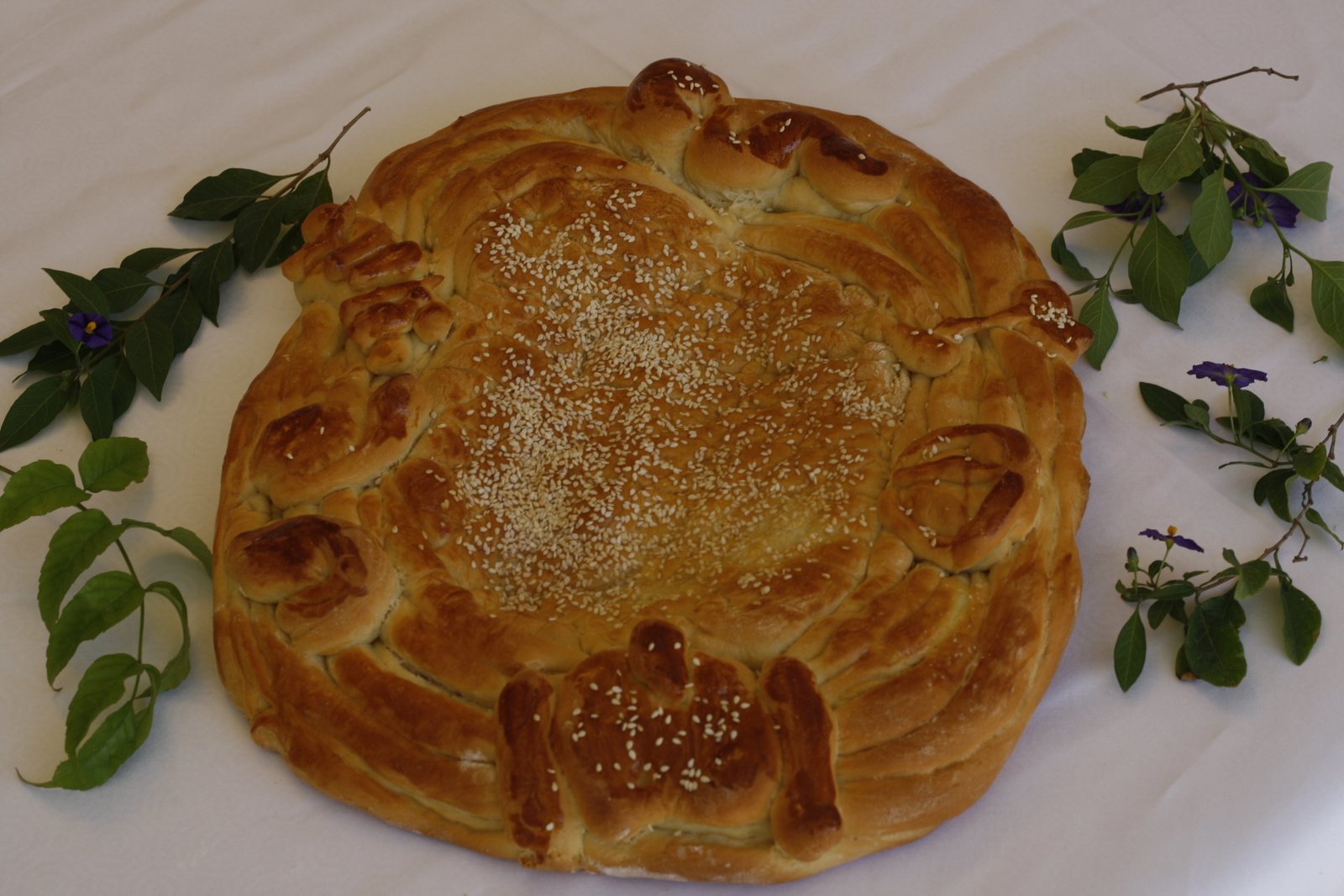
Here’s a picture.
I discovered this Challah from Nicholas Stavroulakis’s wonderful “cookbook of the Jews of Greece.” He drew a lovely picture and offered instructions which I attempted to copy.
The orb at the center which is roughly the size of a smallish Challah represents Mount Sinai . Around it are seven rings-made from ropes of dough-to represent the seven heavens (sheva rakiyim in Hebrew). On top of them are small dough sculptures representing Miriams well, the 10 Commandments, an open Torah scroll, a dove ( a symbol of the Jewish people) and Moses’ copper serpent (nachas nehoset).

This is what it looked like when I took it out of the oven.

Think Twice About this : L’ag B’Omer Eggs


Tinted Eggs
Believe it or not coloring eggs is a Jewish custom, though our color scheme doesn’t include pink, lilac or lime green. Lag B’Omer is the 33rd day of the Omer count between Passover and Shavuot. On L’ag B’Omer the fatal plague infecting Rabbi Akiva’s students ended. L’ag B’Omer is also the yahrzeit or anniversary of the death of Rabbi Akiva’s greatest student Rabbi Shimon Bar Yochai. This day is a holiday day because after his death, Rabbi Shimon’s soul rose toexquisitely sublime levels of holiness.
The midrash says that Rabbi Shimon’s righteousness sustained his whole generation to the point that a rainbow never appeared in the sky for all the years he lived.
The Torah tells us that a rainbow is a reminder of G-d’s promise not to destroy the world. When a rainbow appears, it is a sign that G-d needs to recall that promise because mankind hasn’t been behaving properly. But while Rabbi Shimon was alive, G-d never needed a reminder.
After his death, Jews tinted the shells of hard boiled eggs, the traditional mourner’s food, in colors to remember this. Their rainbow was relatively limited—the Jews used onion skins and tea grounds as their dye and the eggs were various shades of reddish brown.
Some Jews abandoned this custom because of its resemblance to Easter eggs. Easter has bad associations for Jews because so many pogroms and anti-Semitic attacks took place during this holiday. If your family doesn’t already follow this custom, you may want to think twice before adopting it.My Rabbi isn’t so sure that it is a good idea.tinted eggs for L'ag B'Omer maybe But if you’re curious about how to dye eggs naturally, here’s how.
Tinted eggs.
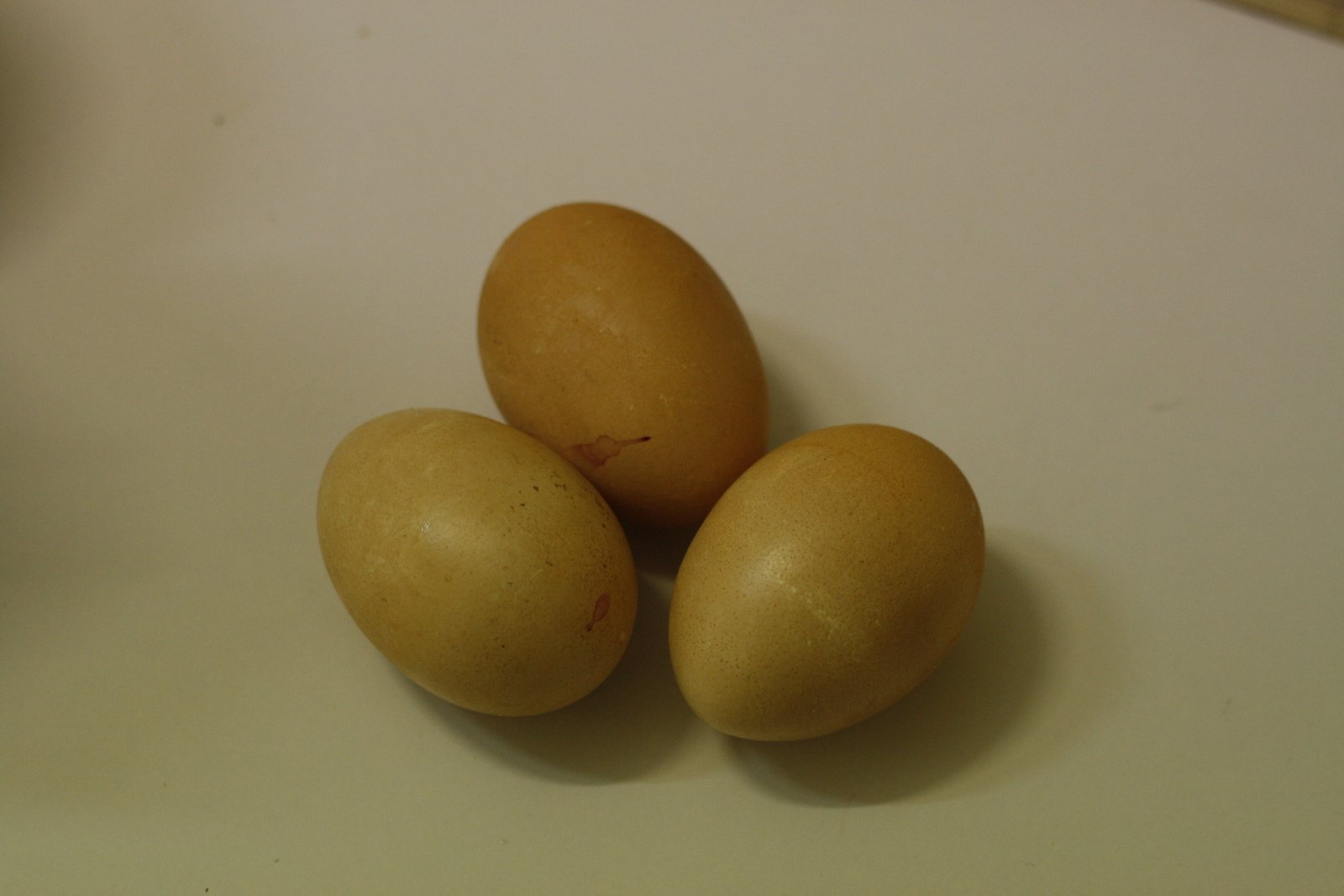
Hard boil eggs in the usual way. Put plenty of onion skins—red and brown and tea grounds into the cooking water. Eggs will take on a reddish-brown tint.

Mufleta for Dummies: How to cook like a Morrocan without really trying.


While Ashkenazim spent the night after Pesach packing up the Pesach dishes, Morrocan Jews have a party called Mimouna. They have been doing this for centuries though no one is really sure why. Unlike most holidays, Mimouna doesn’t appear in any books of Jewish law and it’s celebrated only by Jews of Morroccans and North African ancestry-Syrians don’t do Mimouna; neither do Litvaks or Hungarians.
Scholars point out that since the day coincides with the Yarhrzeit of Maimon, the father of Moses the Son of Maimon (Moses Maimonedes or the Rambam) the feast honors his death-and passage to the next world. (the day of death is a “birthday” of sorts as the soul moves on to another level in it’s journey) The word Mimouna even sounds like a contraction of hiloula and Maimon.
There are others who say that Mimouna comes from Emuna which means faith and that the day is a celebration of faith. In fact the entire Pesach holiday which commemorates the Jewish people’s giant leap of faith following the unseen G-d into the desert without packing sandwiches is the consumate holiday of faith. The mystics say that faith energy is in the air at Pesach time and that if we plug in we can recharge our faith battery for the entire year so maybe Mimouna connects to that.
In old Morrocco the Arabs visited their Jewish neighbors bringing gifts of sourdough starter. Because sourdough, which was the premodern and more natural form of yeast is hametz incarnate the Jews discard theirs before Pesach .This gift helped them start their post Pesach baking. In the traditional blessing is “tirbachu u’tis’adu”, Morrocan or Judeo-Arabic meaning be

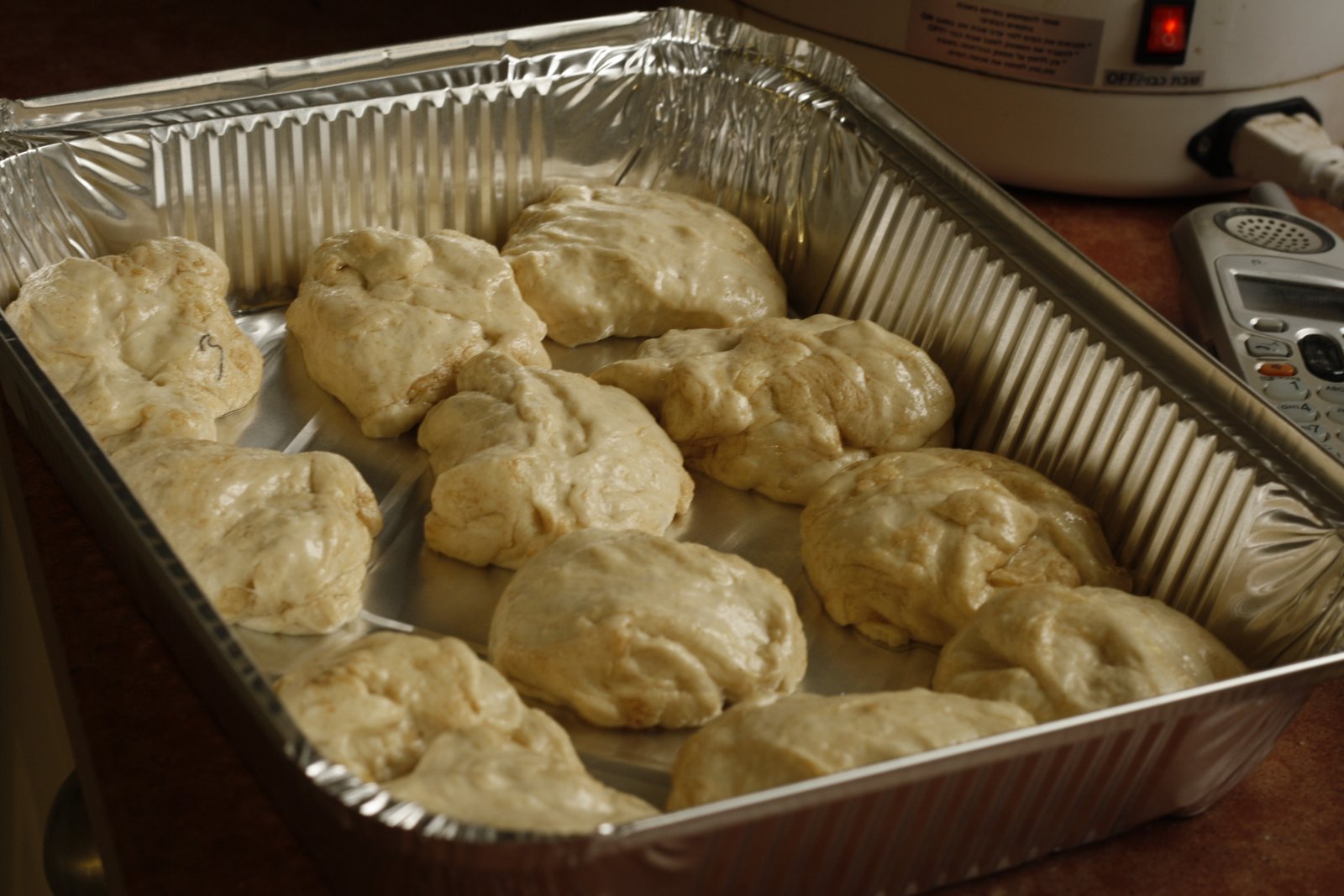
Mufleta dough

Mufleta dough

streching out the pancake

streching out the pancake

blessed and have a good luck,” .
The first dish the Jews would make was a leavened pancake called Mufleta. Mufleta is flatbread, similar in taste and texture to Indian chappati. It is very tasty, especially when topped with honey or slathered with a honey butter mixture and not at all complicated to make once you get the hang of it.
Mufleta—enough for 12 pancakes.
3 and ½ cups of flour
½ tablespoon yeast
½ tablespoon salt
½ tablespoon sugar
1/3 cup of vegetable oil (approximately)
1 and ½ cups lukewarm water
1. Dissolve yeast in water. Add sugar. Combine flour and salt. Mix in flour gradually and knead until you’ve got a soft batter.
2.Pour about a tablespoon of oil on top of the batter so that it is covered by a thin film of oil. It should look shiny
3.Cover the dough with a kitchen towel and let it rest for an hour
4. Cut the dough into 12 pieces. Each piece should be about the size of a medium sized apple.
5. Let the dough balls rest for 10 minutes
6. Create an oiled work surface. You can pour a thin film of oil on top (about a tablespoon)directly onto a granite countertop or a marble cutting board. Using the palms of your hands work the ball into a thin pancake (it may break in places—that doesn’t really matter
7. Heat up a tablespoon of oil in a frying pan. Slide the first pancake into the hot pan.
8. Cook until it starts to brown on one side and the flip the pancake over (it should take about a minute to brown)
9.The layer the next pancake on top.
10. Flip the pancake tower over so that the new pancake is touching the surface of the frying pan. When it browns flip over and layer a new pancake on top. Flip until brown and then layer a new pancake. Keep on doing this until your dough balls are finished. In the end you will have created a tower of mufletot, one on top of the other.
If you can , get two people on the job. One person can stretch the dough into pancakes. The other can supervise the cooking and flipping. In a pinch one person can do the entire job.
Separate the pancakes—they should come apart easily and serve right away with silan, melted butter, melted butter mixed with honey or jam. Though the tradition is to have them with something sweet they can work well with a savory dip too.

Matzo Balls for Everyone


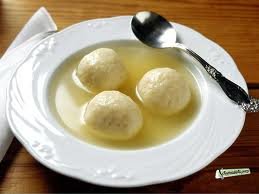
matzo ball soupThere is no real reason to eat matzo balls on Pesach. Neither Pharoah nor Moses ate them and yet they are integral to the Seder. In many homes it is unimaginable to retell the story of the Exodus without taking a break midway through the telling to enjoy a bowl of matzo balls swimming in chicken soup.
Matzo balls aren’t without controversy. Some people believe that the Pesach dumplings also known as kneidlach, should be light and feathery—“floaters,” as opposed to the firmer and more substantial balls known as “sinkers.”
Because they incorporate more air—some “floater” recipes even call for whipped egg whites-, floaters are light and fluffy and also lower in fat than sinkers. Sinkers which tend to include oil or schmaltz along with eggs and matzo meal are chewy and substantial
Sinkers is actually a misnomer. If you keep the lid on while you are boiling them, your sinkers won’t sink. They will float above the soup and retain their firm texture and shape. Unlike the feathery floaters they can be filled with interesting surprises like the classic the Lithuanian “neshoma,” filling. Whichever knaidl you chose, you can’t go too far wrong.
Firm matzo balls (sinkers) from Love and Knishes by Sara Kasdan
Ingredients
Two tbsp schmaltz
One egg
½ tsp salt
Dash nutmeg

Preparation
1. Cream all ingredients together until smooth
2. Add ¼ to ⅓ C matzo meal
3. Refrigerate for at least one hour (you can leave overnight and make balls the next day)
4. Roll into walnut-sized balls and drop into rapidly boiling salted water or soup.
5. Cook covered for 30 minutes. Drain and serve.
Freezes well. Makes 10 balls. Serves 4-6
Kneidlach with a Neshoma
Thisgolden egg yolk filling is whimsically called a neshoma or a soul. Don’t try this will floaters. A neshoma needs the tough outer skin a sinker provides.
Preparation
1. In a separate dish mix together one egg yolk, ¼ to ½ tsp sautéed onion, a pinch of cinnamon and enough matzo meal to create a paste (measure it in pinches).
2. Make balls using the firm recipe.
3. In the palm of your hand flatten each ball slightly and insert a quarter teaspoon of “neshoma’” filling.
4. Seal the filling inside by closing the matzo ball batter around it and follow cooking instructions for firm matzo balls.
Fluffy Kneidlach or Floaters
Ingredients
One egg
2 tbsp water
2 tbsp oil or schmaltz
1 Pinch cinnamon
⅓ C matzo meal
½ tsp salt and a good pinch of black or white pepper
Preparation
Pinch cinnamon
Pinch sugar
⅓ C matzo meal
½ tsp salt and a good pinch of black or white pepper
Preparation
1.Mix all ingredients together . Cover with plastic wrap and leave in the fridge to set for at least an hour. You can leave this batter overnight.
2. Fifteen minutes before you are ready to roll your balls boil up a small pot of well salted water or soup stock.
2.Wet your hands and roll into into walnut-sized balls
3.. When the water reaches a roiling ball turn it down to simmer and plunge the balls inside. Cover the pot and let the balls cook undisturbed for a half hour.
5. Drain and serve.
Freezes well.
Chicken Balls
In Hassidic homes , matzo balls are off the menu on Seder night. This is because some Rabbis, most of them Chassidic believe that when matzos are mixed with water the mixture runs the chance, leavening or turning into chametz. Hence they ban all matzo liquid mixtures including kneidlach.
As this is a remote possibility, most Rabbis reject this ban Among Chassidim it is the norm to abstain from ‘gebruchts,”—the general term for kneidlach, matzo brei, matzo kugel and other foods based on matzo liquid combinations. (gebruchts is the Yiddish term for broken as matzos are broken or ground before they become wet). Hassidic cooks have cleverly developed an ersatz matzo ball made of ground chicken combined with mashed potato When I first heard about this I was skeptical, but to my surprise it proved to be quite tasty and not unlike the real thing.
Chicken Balls
Ingredients
One pound or 250 grams ground turkey or chicken
One egg
Pinch black pepper
¼ tsp salt
One medium-sized mashed potato.
½ a small onion finely diced
Pinch ginger
¼ C potato starch .
Preparation
1. Combine all ingredients and refrigerate for an hour or more.
2. Boil a pot of soup. Form the mixture into balls—they will be slightly ragged looking.
3. Plunge into rapidly boiling soup.
4. Cook in covered pot over low flame for 45 minutes.
Freezes well. Serves six to eight.